EN
EN Español
If you are evaluating an ABA blown film machine specifically to run recycled material in the core layer, the key question is not whether ABA technology works—it does. The real question is which machine configuration, control system, and support capability will actually deliver stable production with your specific recycled feedstock. This guide walks through the critical selection criteria, from extruder sizing to layer ratio control, so you know what to ask before you commit.
Why the Machine Choice Matters More with Recycled Cores
Running recycled content in the core layer is fundamentally different from running all-virgin film. Post-industrial recycled LDPE and LLDPE typically carry a broader molecular weight distribution, higher gel counts, and traces of inks or adhesives that act as stress concentrators. Even 20% regrind can widen the melt temperature window by 8–12°C compared to virgin resin. These variations place unique demands on the extrusion system that a standard monolayer or poorly configured multi-layer machine may not handle well.
An ABA structure isolates the recycled material in the core, where it cannot affect the film surface. But the machine itself must be engineered to manage that isolation effectively—and not every ABA machine on the market is built for high-regrind formulations.
1. Extruder Configuration and Sizing
The most fundamental decision is how the three extruders (or two, in some ABA configurations) are sized relative to each other.
What to look for:
-
Core extruder capacity — If you plan to run 50–70% recycled content in the core, the core extruder should be larger than the two skin-layer extruders. A common configuration uses a 60mm or 65mm core extruder with 50mm skin extruders, allowing the core to deliver 50–60% of total output while the skins provide the surface quality.
-
Screw design for recycled material — Recycled feedstocks often require screws with longer compression zones and specialized mixing sections to handle the broader molecular weight distribution. Standard general-purpose screws may struggle with gel formation and inconsistent melt.
-
Extruder cooling — Recycled materials can generate more frictional heat due to contamination or varying melt flow indices. Look for machines with robust barrel cooling systems to maintain temperature stability.
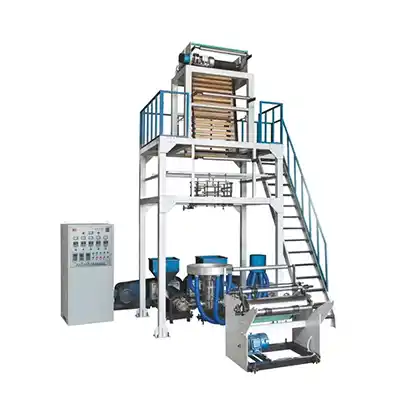
2. Die Design and Layer Distribution Control
The die is where the three layers come together—and where your film quality is won or lost.
Critical factors:
-
Layer ratio flexibility — Your ability to adjust the percentage of each layer is essential. For recycled cores, you typically want the core to be 50–70% of total thickness, with each skin at 15–25%. The machine should allow independent control of each extruder's output to achieve these ratios.
-
Layer distribution accuracy — Even a 2% drift in core-layer thickness can push haze beyond specification or create delamination during slitting. Look for machines with precise melt temperature control and well-designed feedblock or die systems that maintain consistent layer distribution.
-
Die gap and melt flow optimization — Recycled materials with higher gel counts may require larger die gaps to prevent pressure buildup and screen pack blinding. Discuss your specific recycled material with the supplier to confirm die compatibility.
3. Temperature Control Precision
Recycled materials have narrower processing windows than virgin resins. Overheating can cause degradation; underheating leads to gels and poor melt homogeneity.
Selection criteria:
-
Number of temperature zones — More zones mean finer control. Yongbang's ABA machines feature up to 9 independent temperature zones with ±1°C control accuracy.
-
Heating system type — Ceramic heating elements or infrared heating elements offer faster heating with superior heat retention compared to standard band heaters.
-
Cooling response time — When the melt temperature drifts due to feedstock variation, the cooling system must respond quickly. Air cooling versus oil cooling—each has trade-offs in response time and maintenance requirements.
4. Material Compatibility and Process Parameter Database
One of the most overlooked factors in equipment selection is the supplier's experience with your specific materials.
Questions to ask:
-
Has the supplier processed recycled content similar to yours?
-
Does the supplier have documented processing parameters for the materials you plan to run?
-
Can the supplier provide starting parameters for your material to shorten the ramp-up period?
Yongbang has built a proprietary processing database covering over 2,000 plastic materials, including PLA, PBAT, and various recycled formulations. This type of institutional knowledge can significantly reduce the time and scrap cost of commissioning a new line with recycled feedstocks.
5. Automation and Control Systems
Running recycled material requires more active process management than virgin-only production.
Essential control features:
-
PLC monitoring with real-time extrusion control — The ability to monitor and adjust extruder speeds, temperatures, and pressures in real time is non-negotiable.
-
Thickness monitoring — Online thickness monitoring systems with adequate resolution (0.5μm or better) allow you to detect layer ratio drift before it causes quality issues.
-
Recipe storage — If you switch between different recycled feedstocks or blend ratios, the ability to save and recall process recipes is invaluable.
Check available plastic machine parts and upgrade options for control system enhancements.
6. After-Sales Support and Spare Parts
This is often underestimated in the buying process, but it becomes critical when you are running variable recycled feedstocks.
Support requirements:
-
Process optimization support — Will the supplier help you dial in parameters for your specific recycled material during commissioning?
-
Spare parts availability — Recycled materials can cause faster wear on screws, barrels, and screen changers. Confirm that critical spare parts are readily available.
-
Training — Does the supplier provide on-site training for your operators on running recycled materials?
ABA Blown Film Machine Selection Checklist
Use this checklist when evaluating ABA blown film machines for recycled core processing:
| Criteria | What to Check | Why It Matters |
| Core extruder size | Is the core extruder appropriately larger than skin extruders? | Ensures sufficient core output for your target recycled content percentage |
| Screw design | Is the screw optimized for recycled material (longer compression zone, mixing section)? | Prevents gel formation and inconsistent melt |
| Temperature zones | Are there at least 7–9 independent zones with ±1°C accuracy? | Recycled materials need tight temperature control |
| Layer ratio control | Can you independently adjust each extruder's output? | Required to achieve target layer distribution |
| Die design | Is the die compatible with your specific recycled material's melt characteristics? | Prevents pressure buildup and quality issues |
| Material database | Does the supplier have experience with materials similar to yours? | Shortens commissioning time and reduces scrap |
| PLC system | Does it offer real-time monitoring and recipe storage? | Enables active process management |
| Spare parts | Are critical components readily available? | Minimizes downtime when running abrasive recycled materials |
| Training | Is operator training included for recycled material processing? | Ensures your team can run the line effectively |
Frequently Asked Questions
What recycled materials can an ABA blown film machine process?
ABA machines can process post-industrial LDPE, LLDPE, and HDPE regrind, as well as washed post-consumer recyclate (PCR) in the core layer. Yongbang's machines have also processed recycled LDPE with up to 70% recycled content achieving 98% film clarity compared to virgin material processing. The specific capability depends on screw design and die configuration.
What percentage of recycled content can I run in the core layer?
With a properly configured ABA machine, core layers can typically accommodate 50–80% recycled material. The actual percentage depends on your recycled material quality, the film application requirements, and the machine's ability to maintain melt stability.
How does ABA compare to ABC for recycled core processing?
ABA uses two identical outer layers of the same material, which simplifies resin logistics and reduces the number of materials you need to inventory. ABC allows three different materials but adds complexity. For recycled core applications where the outer layers serve primarily as protective skins, ABA is often the more practical and cost-effective choice.
What is the typical layer ratio for an ABA film with recycled core?
A common starting point is 20% outer skin / 60% core / 20% outer skin. The exact ratio depends on the film's end-use requirements—thicker skins provide better printability and seal strength, while a thicker core allows more recycled content.
How do I know if my recycled material is suitable for ABA core processing?
Key indicators include consistent melt flow index, low gel count, and minimal contamination. A material supplier or equipment manufacturer with a processing database can help you assess your specific recycled feedstock. Testing with a small sample batch is recommended before committing to full production.
What ongoing maintenance is required for running recycled materials?
Recycled materials typically cause faster wear on screws, barrels, and screen packs due to higher contamination levels. Expect more frequent screen changes and plan for screw and barrel inspection at shorter intervals than with virgin-only production.
Conclusion
Buying an ABA blown film machine for recycled core processing is not just about the machine itself—it's about the total capability package: extruder sizing, die design, temperature control, material expertise, and ongoing support. The right machine will isolate your recycled material effectively, maintain stable bubble formation, and deliver film quality that meets your customers' requirements.
Before making a decision, verify the supplier's experience with recycled materials similar to yours, confirm that the machine configuration matches your target recycled content percentage, and ensure that after-sales support includes process optimization assistance.
Review the available ABA blown film machine configurations to see which model aligns with your production requirements. Discuss your specific material and output goals with the supplier to confirm the right technical specification.
 Brochure Download
 FAQ
FAQ