EN
EN Español
The push for thinner, tougher, and more sustainable plastic films has reshaped what converters demand from their production lines. A monolayer structure can no longer keep up with the combined requirements of high puncture resistance, oxygen barrier, and downgauged thickness. That is exactly why conversations on factory floors and at trade shows keep circling back to one technology: 5-layer co-extrusion.
For many processors, the jump from mono or 3-layer lines to a 5-layer setup seemed intimidating just a few years ago. Today, it has become the most discussed upgrade path—not because seven or nine layers are impossible, but because five layers have hit a sweet spot between performance, complexity, and return on investment.
What makes a 5-layer structure so different
At its core, co-extrusion melts and combines multiple polymer streams inside a single die, building a film in which each layer takes on a specific job. A typical 5-layer film might look like this: a polyolefin skin for heat sealability, a tie layer for bonding, a core polyamide or EVOH barrier layer, another tie layer, and a second skin for stiffness or gloss. The result is not just a film with more layers; it is an engineered system that separates functions so each material can be used where it counts most.
This functional separation directly answers three headaches that have haunted flexible packaging for years:
-
Cost-pressure from resin prices: With a 5-layer structure, expensive barrier polymers (like EVOH or specialty nylons) can be sandwiched into a thin core layer instead of being blended throughout, reducing overall resin cost per kilogram of film.
-
Downgauging without sacrificing strength: Because the layers share structural duties, total film thickness can often drop by 10–20% compared to a three-layer equivalent while maintaining dart impact and tear resistance.
-
Recyclability and material efficiency: Designers can place recycled content or lower-cost materials in the inner layers, hidden from the surface, keeping appearance and food-contact compliance intact.
Three layers vs. five layers: why the extra layers matter now
Not long ago, a 3-layer line was the workhorse for many blown film converters. It could handle a skin/tie/core ABC structure and was simpler to run. The table below summarizes how the landscape has shifted, pushing more operations toward five layers.
| Criteria | 3-Layer Co-Ex | 5-Layer Co-Ex |
|---|---|---|
| Typical structure flexibility | Limited to A/B/C or symmetric A/B/A | Allows A/B/C/D/E, with barrier splitting and asymmetric skins |
| Barrier performance with EVOH | Good, but EVOH is relatively thick and exposed to moisture from skin | Excellent; EVOH can be split into two thin layers or shielded by adjacent polyolefin caps |
| Use of recycled content | Restricted to core layer only, must be covered both sides | Can embed reclaim in two separate sub-layers while keeping virgin skins for optics |
| Gauge reduction potential | Moderate | 10–20% further reduction typical without losing mechanical properties |
| Capital and operational complexity | Lower; fewer extruders and controls | Higher; but modern automation closes the gap |
The data supporting the shift is hard to ignore. According to Smithers’ report The Future of Flexible Packaging to 2026, multi-layer structures above three layers are forecast to grow at over 4% CAGR, driven largely by food and medical packaging where barrier and thin-gauge demands are most strict. Processors who have high-performance co-extrusion lines installed report that the payback from material savings alone can hit the two-year mark, even before accounting for the premium pricing that high-barrier films command.
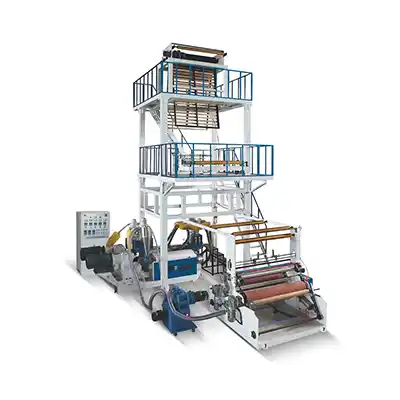
Why 5 layers became the “rational” choice
As soon as you move beyond five layers, the capital cost rises again—more extruders, a more complex die, longer purging times during changeovers. Seven-layer and nine-layer systems still have their place in ultra-high-barrier or specialized shrink applications, but for the vast middle ground of food, hygiene, and heavy-duty sacks, five layers give converters the design freedom they need without overengineering the process.
A few practical examples illustrate this shift:
-
Fresh pasta packaging: A 5-layer PA/EVOH/PA structure with polyolefin skins brought the oxygen transmission rate (OTR) below 1.5 cm³/(m²·day·atm) at 23°C and 50% RH, tested per ASTM D3985, while reducing total thickness from 75 µm to 60 µm compared to the previous 3-layer design.
-
Stand-up pouches for detergents: By hiding post-industrial reclaim in two sub-layers, one converter avoided visible specks and kept seal strength above 28 N/15mm, meeting brand owner specs without virgin resin overuse.
-
Shrink film for beverage multipacks: A 5-layer structure using a stiff middle layer enabled a 15% downgauging, directly cutting the weight per pallet and improving the product’s carbon footprint.
These are not lab curiosities; they are daily decisions made on the shop floor by operators who care about scrap rates and changeover time. Here, modern blown film systems with auto-profile control significantly influence whether a 5-layer line is a joy or a burden to run. When an operator can adjust individual layer thicknesses from the HMI without stopping the line, the barrier optimization that used to take hours now happens in minutes.
What to look for when moving to 5-layer production
If you are evaluating an upgrade, three factors often determine whether the project delivers on its promise, beyond the number of extruders:
-
Die design and spiral mandrel geometry: A poorly designed die leads to non-uniform layer distribution and visible banding. Look for optimized spiral angles and low residence time, especially when running heat-sensitive barrier resins.
-
Quick material change capabilities: Because 5-layer recipes often switch between different structures (e.g., from barrier film to plain PE film), fast purging and rapid screen changers minimize the off-spec product at each transition.
-
IBC and gauge control: With thinner films, internal bubble cooling combined with segmented air rings and optical gauge scanners becomes crucial to maintain ±3% thickness variation across the web, which directly impacts roll conformity for downstream converting.
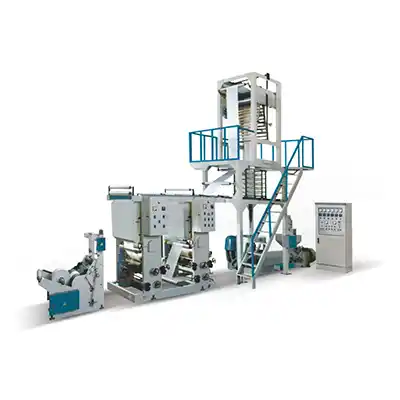
These technical demands have pushed equipment builders to rethink their platforms. Instead of simply adding more extruders to a legacy frame, many production lines for 5-layer barrier films now integrate load cells for individual layer weight monitoring, adaptive temperature zones, and recipe-driven changeovers that reduce human error.
Getting the support to make the transition smooth
Moving from three layers to five is not just a purchase order—it involves operator training, resin handling adjustments, and sometimes rethinking the entire in-house scrap recycling loop. Experienced suppliers typically begin with a thorough material audit and trial runs before the machine ships, so the learning curve shifts from the customer’s floor to the vendor’s lab. According to several U.S. and European processors interviewed at interpack, the difference between a successful ramp-up and a six-month delay often comes down to the depth of process engineering support bundled with the equipment.
That is where choosing the right partner matters. Yongbang has designed its co-extrusion platform with the daily realities of film producers in mind—modular extruder sizing, intelligent layer control, and a focus on reducing downtime during recipe changes. If you are exploring what a purpose-built 5-layer line could mean for your product mix, you may want to explore Yongbang’s range of co-extrusion equipment to see how recent engineering updates address common pain points like die cleanout time and gauge variation.
Note: Performance data examples cited are based on publicly available technical presentations and typical industry benchmarks. Results for specific resins and structures should be verified through a commercial-scale trial on your target machine.
 Brochure Download
 FAQ
FAQ