English
 Español
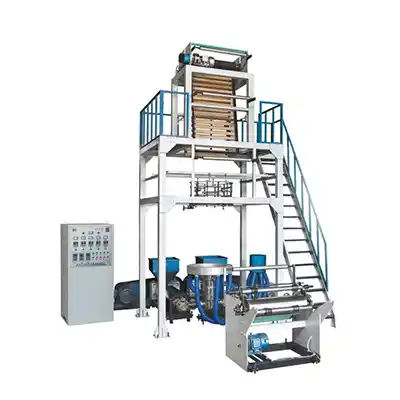
For packaging manufacturers torn between two mainstream three-layer film production routes, picking between ABA and ABC co-extrusion designs boils down to actual production costs, film performance needs, and long-term operational flexibility. A professional ABA blown film Machine delivers balanced output quality and raw material savings for mass daily packaging production, while ABC layered setups shine in high-barrier, customized functional film scenarios. As 3-layer blown film lines occupy 35% of global installed extrusion equipment per 2026 industrial data from Business Research Insights, clarifying their core differences directly cuts unnecessary investment risks and material waste for small to mid-sized film producers. Every factory manager I’ve consulted in the flexible packaging sector agrees that blind equipment selection often leads to 15-20% higher daily operating costs, making this comparison far more practical than theoretical technical discussions.
Core Structural Logic Behind Two Three-Layer Designs
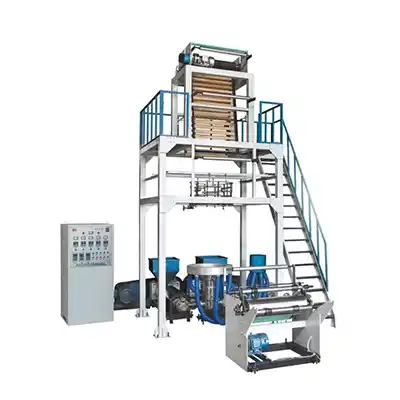
To judge which production mode holds more value, we first need to break down their inherent structural differences, not just surface function labels. The symmetrical three-layer film layout defines ABA technology, adopting a dual-extruder framework where the inner and outer A layers use identical plastic resins, with a unique B core layer sandwiched in the middle. This streamlined mechanical layout simplifies pipeline distribution and daily parameter adjustment for on-site operators.
In contrast, ABC co-extrusion blown film relies on three independent extruders, with A, B, and C layers adopting completely separate material formulas and physical properties. This asymmetric layered design is engineered to meet segmented performance demands, yet it adds obvious complexity to equipment operation and routine maintenance. For workshop teams with limited technical training, multi-extruder coordination will undoubtedly increase the threshold for stable production.
From die head construction details, ABA integrated flow channels reduce material residue dead angles, while ABC split flow structures require more thorough daily cleaning to avoid cross-material contamination. This subtle gap directly influences continuous film production efficiency, especially for factories that need to switch raw material formulas frequently.
Cost Control Gap: Raw Materials and Equipment Operation
Cost sensitivity remains the top concern for over 60% of blown film buyers, especially amid fluctuating virgin plastic resin prices in 2026. The ABA structural design presents outstanding advantages in material utilization. The consistent double outer layers allow large-scale blending of recycled plastic particles in the middle B layer without damaging the film’s surface flatness and printing performance, a key advantage that industry practitioners have verified through long-term trial production.
ABC production lines cannot replicate this cost-saving logic. Each independent functional layer needs customized high-purity materials, and the extra third extruder raises initial equipment procurement budgets by 25-30%, based on multilayer film machinery market statistics from Valuates Reports. Beyond upfront investment, daily power consumption and wearing part replacement costs of triple-extruder devices also create long-term cost burdens.
If your core business focuses on shopping bag, garbage bag, and general industrial wrapping film mass production, excessive functional layer configuration of ABC equipment becomes redundant expenditure. For manufacturers prioritizing gross margin stability, lean and efficient production configurations are always more down-to-earth than overdesigned performance.
Film Performance & Application Scenario Boundaries
Cost reduction never means performance compromise; each technical route has its exclusive applicable scenarios. Symmetrical ABA film boasts uniform tensile strength and excellent folding resistance, perfectly matching the usage standards of daily disposable packaging films. The balanced physical structure also ensures stable sealing performance in high-speed bag-making processes, reducing finished product damage rates during deep processing.
ABC asymmetric layered films carve out niche markets with targeted functional upgrades. By configuring specialized barrier materials such as EVOH or PA in independent layers, it achieves high oxygen and moisture isolation effects, which are indispensable for long-shelf-life food packaging, medical protective film, and chemical product packaging. Such high-value-added film products have higher profit margins, yet their market demand is relatively concentrated and not suitable for extensive mass production.
I’ve observed many manufacturers make the mistake of purchasing high-spec ABC lines for ordinary packaging orders, resulting in underutilized equipment performance and prolonged cost recovery cycles. Defining your terminal product positioning first is the premise of rational equipment selection. For universal packaging needs with moderate performance requirements, a well-matched three-layer co-extrusion solution can fully meet delivery standards and avoid performance surplus.
Maintenance Difficulty and Long-Term Production Stability
Long-term production stability determines the sustainable profitability of the production line, and equipment maintenance difficulty is a hidden factor easily overlooked in early selection. With one fewer extruder and a simplified transmission system, ABA film production equipment features fewer vulnerable parts and a more intuitive daily maintenance process. Ordinary workshop staff can complete routine inspection and simple troubleshooting after basic training, lowering enterprise technical management costs.
The complex three-extruder linkage system of ABC co-extrusion equipment requires regular professional calibration of extrusion speed and temperature parameters. Once coordination deviation occurs, it will cause uneven film thickness, layer separation, and other quality defects. In peak production seasons with tight delivery schedules, complex maintenance procedures may directly delay order progress.
In terms of production line compatibility, mainstream optimized three-layer extrusion models on the market support flexible switching of multiple raw material formulas. The streamlined structural design not only guarantees stable 24-hour uninterrupted operation but also shortens the material replacement cycle, bringing more flexible production scheduling space for multi-category order manufacturers.
Final Verdict: Which Co-Extrusion Solution Takes the Lead
After weighing cost, performance, application scenarios, and maintenance costs comprehensively, there is no absolute winner between ABA and ABC co-extrusion blown film technology—only the most suitable choice for business positioning. For most small and medium-sized packaging enterprises, trading companies, and factories focusing on civil and general industrial packaging, balanced and cost-controlled solutions are the more rational investment direction.
The second ABA blown film Machine integrates years of practical production optimization experience from Yongbang, realizing perfect coordination of energy saving, high efficiency, and easy operation. It fills the market gap between single-layer low-end film equipment and high-cost multi-functional ABC production lines, and is particularly friendly for new entrants to the flexible packaging industry and manufacturers seeking capacity expansion.
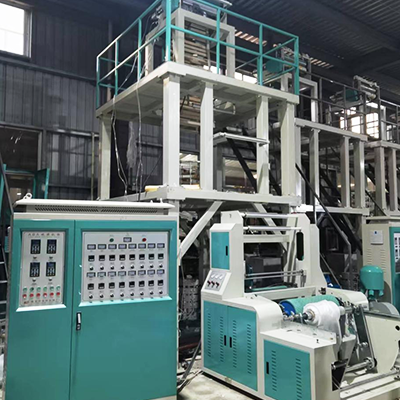
ABC co-extrusion blown film technology still has irreplaceable value in high-barrier, high-precision functional film segmentation tracks. It is the preferred choice for brands focusing on high-value-added food and medical packaging. In short-term order planning and long-term layout, manufacturers need to match equipment performance with market demand to avoid over-investment or insufficient production capacity.
As the global multilayer co-extruded film market is projected to grow at a 5.5% annual compound growth rate until 2031, refined segmented production will become the industry trend. Choosing targeted film production equipment, combining customized formula debugging and one-stop after-sales support services, can help packaging enterprises build stronger market competitiveness in the fierce homogeneous competition. Yongbang’s professional technical team can provide exclusive formula debugging and production line transformation plans according to your local market characteristics and order needs, helping you maximize equipment utilization.
 Brochure Download
 FAQ
FAQ