EN
EN Español
A mid-sized packaging producer recently replaced its imported seven-layer line with a five-layer system. The result? 22% lower energy consumption, 15% faster changeover times, and a six-month payback period. Their mistake? Over-specifying the first machine.
It happens more often than you think. Buyers assume “more layers, more throughput, more automation” equals better output. In reality, over-specifying a co-extrusion blown film line often leads to idle capacity, costly maintenance, and frustrated operators. This guide walks you through practical ways to avoid that trap, so you invest only in what truly serves your production.
Why Production Managers Fall into the Over-Specification Trap
Three common drivers push teams toward excessive specifications:
-
“Future-proofing” without a roadmap – Buying extra layers or oversized extruders “just in case” a new application appears. Most cases never materialize.
-
Vendor pressure – Some suppliers earn higher margins on complex systems and may recommend components you don’t need.
-
Copying competitor specs – What works for a high-volume medical film producer rarely fits a flexible packaging job shop.
According to industry data from a 2023 packaging machinery survey, nearly 40% of co-extrusion lines operate below 60% of their theoretical capacity. That’s capital sitting idle.
The Hidden Costs of an Over-Specified Co-Extrusion Line
An oversized configuration doesn’t just inflate the initial price tag. It creates ongoing drag:
-
Energy waste – Larger motors and more heating zones running at partial load drop efficiency.
-
Complex maintenance – Additional extruders, extra feed blocks, and more sensors mean more failure points.
-
Operator friction – Complex control interfaces increase training time and human error.
-
Longer cleaning & changeover – Every extra layer adds purging and disassembly steps.
A clear example: a flexible packaging plant specified a nine-layer line for standard three-layer barrier films. They spent 35% more on tooling and struggled with melt instability because the feed block was designed for entirely different rheological profiles. In contrast, a properly sized co-extrusion blown film solution would have delivered consistent output at half the complexity.
How to Right-Size Your Multi-Layer Blown Film Equipment
Instead of chasing maximum specifications, focus on three decision filters. These apply whether you produce agricultural films, shrink films, or high-clarity packaging.
Filter 1: Match Layer Count to Real Product Requirements
Ask your team: Do we genuinely need seven layers, or would five layers with better material distribution achieve the same properties? For many commodity films, three to five layers already provide sufficient barrier, seal strength, and optics. Extra layers only add value when you run sophisticated structures like EVOH barrier with tie layers and symmetrical skin materials.
A practical exercise: List your top five film structures by production volume. Identify the maximum number of layers among them. That number, plus one margin layer for flexibility, is your realistic requirement.
Filter 2: Avoid Overrated Extruder Sizes
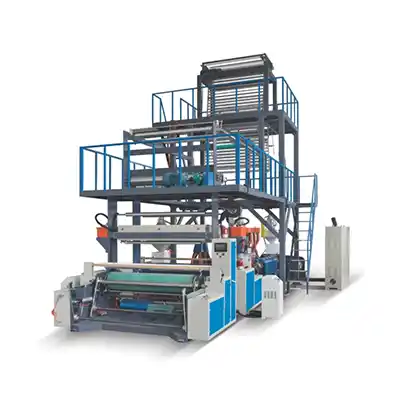
Many buyers specify oversized extruders “to run faster someday.” But extruder size must match die diameter, cooling capacity, and haul-off design. An oversized extruder often forces you to run at low screw speeds, leading to poor mixing and melt temperature variation.
Rule of thumb from extrusion engineers: target 60–80% of maximum screw speed for normal production. If your required output pushes a 75mm extruder to 90% speed, move up one size. If it only needs 40% of a 90mm machine, downsize.
Filter 3: Question Every Automation Feature
Automation is valuable – but not every option pays off. For example, automatic gauge control saves material on high-volume runs but adds unnecessary complexity for short jobs. Similarly, fully automatic winder transfers are great for 24/7 operations; for two shifts, semi-automatic is often sufficient.
One packaging plant saved $120,000 by skipping an automatic die centering system they rarely used. Instead, they invested in a modular control platform that allowed future upgrades when actual needs emerged.
The “Lean Specification” Checklist – Before You Sign Anything
Use this checklist during supplier negotiations to stay disciplined:
| Parameter | Over-Specified (Red Flag) | Right-Sized (Green Flag) |
|---|---|---|
| Layer count | 7+ layers for standard films | 3–5 layers matching your top 3 products |
| Extruder sizes | One size larger than needed for “just in case” | 60–80% speed utilization at target output |
| Automation level | Fully automated everything | Needs-based: auto gauge control, manual die bolts for low volumes |
| Die diameter | Larger than cooling capacity can handle | Balanced with extruder output and frost line height |
| Winder | Fully automatic transfer for 1-shift operation | Semi-automatic or surface winder suitable for shift pattern |
Common Mistakes When Configuring a Co-Extrusion Blown Film Line
Even experienced buyers repeat these errors:
-
Ignoring material compatibility – A line specified for LDPE may not handle LLDPE or metallocene grades. Request rheology simulations or trial runs.
-
Forgetting downstream integration – A powerful extruder pair with a weak collapsing frame or inadequate haul-off creates bottlenecks.
-
No spare parts strategy – Over-specified custom components often have long lead times. Standardized components keep you running.
According to a service manager from a European film extruder, 70% of co-extrusion line breakdowns trace back to operator confusion caused by unnecessary controls. Keep the interface simple.
When Should You Accept Higher Specifications?
There are valid cases for going beyond baseline. Consider higher specs when:
-
You have a signed multi-year contract for a high-complexity film (e.g., deep-draw vacuum packaging)
-
Your raw material strategy frequently changes (extruders with quick screw change systems justified)
-
You run clean-room or medical films requiring extra surface treatment and filtration
In those scenarios, the extra investment directly ties to revenue. Otherwise, resist.
How to Work with Suppliers Without Getting Over-Sold
Start with a performance-based requirement sheet. Instead of “seven-layer co-extrusion line,” write: “Produce 500 kg/hour of 200µm barrier film with EVOH, oxygen transmission rate < 1 cc/m²/day, changeover under 90 minutes.” Then ask each supplier to propose the simplest configuration that meets those numbers.
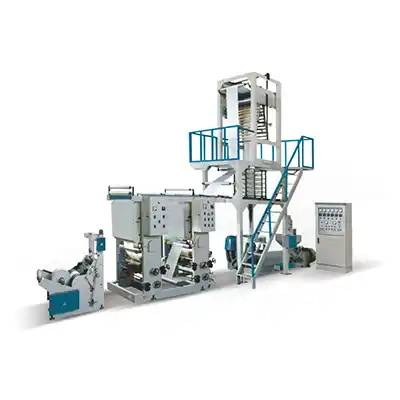
Reputable suppliers will appreciate the clarity. And when you evaluate proposals, look for co-extrusion blown film equipment vendors who offer modular designs with clear upgrade paths. That allows you to start lean and add features only when orders justify them.
The Bottom Line: Performance Over Promises
An over-specified co-extrusion blown line doesn’t make better film – it makes a more expensive, harder-to-run machine. Operators become troubleshooters instead of producers. Maintenance teams chase ghosts in unused sensors.
Right-sizing saves 15–30% of capital cost and reduces daily operating expenses. It also frees up budget for what truly matters: raw material testing, operator training, and quick-change tooling that boosts productivity.
If you are currently planning a new multi-layer film extrusion system or revising an existing specification, it helps to talk to engineers who have built hundreds of lines for real-world applications. YongYang focuses on practical, scalable co-extrusion solutions that grow with your business – no over-engineering, no hidden complexity.
Whether you need help auditing your requirement sheet or want to explore a modular configuration that avoids the over-specification trap, contact YongYang’s team to review your film blowing line specification. They provide transparent energy modeling and changeover time estimates before you commit.
Have you ever inherited an over-specified line? What’s the one feature you wish you could remove? Share your experience in the comments – your insight might help another production manager avoid the same mistake.
 Brochure Download
 FAQ
FAQ